
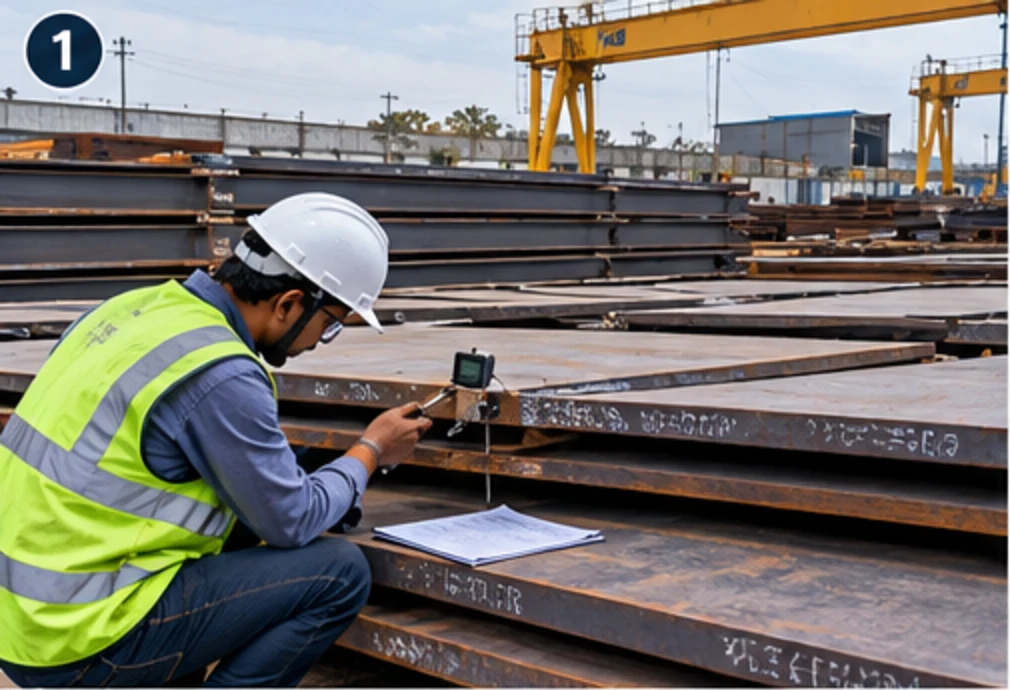
Structural steel fabrication
Heavy Fabrication and Weldments
Plate weldments, built-up sections, equipment supports and large custom assemblies — fitted up, welded, machined and coated in our own shop, then erected under the same contract.
What this service covers
Heavy fabrication is the work that falls outside routine member fabrication: plate weldments, built-up girders, equipment supports, chutes, hoppers, ducts and custom assemblies that are too large, too thick or too heavily welded to be treated as ordinary structural steel. It is bought by plant operators, EPC contractors and equipment suppliers who need a component that arrives true, mates with what it bolts to, and passes inspection without a repair. AKEN marks, cuts, fits up, welds, blasts, paints and machines these assemblies in its own shop at Hirakud, and erects them on site — including inside operating plants during a shutdown window.
A heavy weldment is usually a one-off. There is no second casting and no alternative supplier in the yard, so the questions that decide the job are answered before cutting rather than discovered at load-out: can this assembly be handled by the crane that exists, can it be moved on the road legally, can every weld be reached in the position it has to be made in, and can the mating face stay flat through all the heat that is about to be put into it.
Most failures in this work come from weld volume. Thick plate concentrates heat, and the same heat that produces a sound weld pulls the assembly out of square, closes a gap that was open at fit-up, and moves a bolt hole that was drilled before the welding started. The answers are ordinary engineering: a procedure qualified for the material and thickness, preheat and interpass temperature held where the procedure says, a weld sequence balanced about the neutral axis, jigs and strongbacks strong enough to hold the piece, and machining done after welding where alignment actually matters.
AKEN undertakes the whole sequence in-house and then erects what it made. Where a component exceeds what our shop can lift, turn or move, we say so at enquiry rather than after the drawing is approved, and we propose either a shop splice that the site can bolt or a site fabrication sequence instead. That conversation is cheaper at quotation than at load-out.
Scope of work
What we actually carry out under this service. Anything outside this list is quoted as a separate line rather than absorbed into a lump sum, so you can see what you are paying for.
- Drawing study and a fabrication route for each assembly — weld procedure, welding sequence, handling, trial assembly and inspection points decided before cutting
- Marking and profile cutting of plate and heavy sections, including profiled openings, brackets, stiffeners and edge preparation for full-penetration welds
- Drilling and boring of connection holes and pin bores, with faces machined after fabrication where a mating component needs them flat and true
- Fit-up of large assemblies on the shop floor, checked for overall dimensions, squareness, level of mating faces and the position of every site interface
- Welding of thick plate and heavy sections to a qualified procedure, with preheat and interpass temperature controlled as the procedure requires
- Weld inspection by the method agreed to your specification — visual, dye penetrant, magnetic particle or ultrasonic — with the acceptance criteria taken from that specification
- Trial assembly of components made separately that have to meet on site, so a mismatch is corrected in the shop rather than at height
- Surface preparation and a protective coating system selected for the environment the assembly will actually work in
- Despatch planning — lifting points, transport frames and load-out sequence for pieces that will not travel as ordinary cargo
- Documentation covering material certificates, weld procedures and welder qualification, inspection reports and as-built dimensions
Technical capability
Materials, components and methods. Where a figure would be quoted, the governing factor is named instead — a diameter or a tonnage is a design outcome, not a catalogue item, and the number only means something alongside the loads behind it.
- Plate and built-up work
- Plate cut and fitted into box sections, built-up girders, stiffened panels, brackets and frames, in the thickness the design calls for rather than a shop maximum
- Welding procedure
- Welding to a procedure qualified for the material and thickness, by welders qualified for the position — submitted for approval before production welding starts
- Distortion control
- Balanced sequence, back-step welding, preheat and jigs chosen per assembly, because a heavy weldment will move unless it is both sequenced and held
- Machining after welding
- Holes and bores machined after fabrication where alignment matters, since welding moves the parent metal around anything drilled before it
- Trial assembly
- Interfaces trial-fitted in the shop whenever two assemblies fabricated separately have to meet on site, with the fit recorded before despatch
- Weld inspection
- Visual inspection in-house on every weld; dye penetrant, magnetic particle and ultrasonic testing arranged to the extent and criteria your specification sets
- Protective coating
- Blast cleaning and a primer and finish system specified for the service — an acid, abrasive or coastal duty is not the same specification as a shed interior
- Handling and load-out
- Lifting points, temporary bracing and transport frames planned with the piece, so the assembly is not distorted by the way it is lifted or carried
How the work is executed
- 01
Enquiry and buildability review
We check the assembly against the shop and the road: can it be handled, turned, welded in position and transported, and can the interfaces be reached for inspection. Anything that cannot is raised before the price is given.
- 02
Procedure and drawing approval
Welding procedure, welder qualification, inspection plan and shop drawings are submitted for approval. For heavy work this stage carries more of the risk than the fabrication itself, so it is not compressed.
- 03
Cutting, forming and drilling
Plate and sections are marked and profiled, edges prepared for the weld detail, and holes drilled or left for machining after welding where the interface demands it.
- 04
Fit-up and trial assembly
The assembly is built on a level floor and checked — overall dimensions, squareness, mating faces and interface positions — while adjustment is still possible.
- 05
Welding, inspection and machining
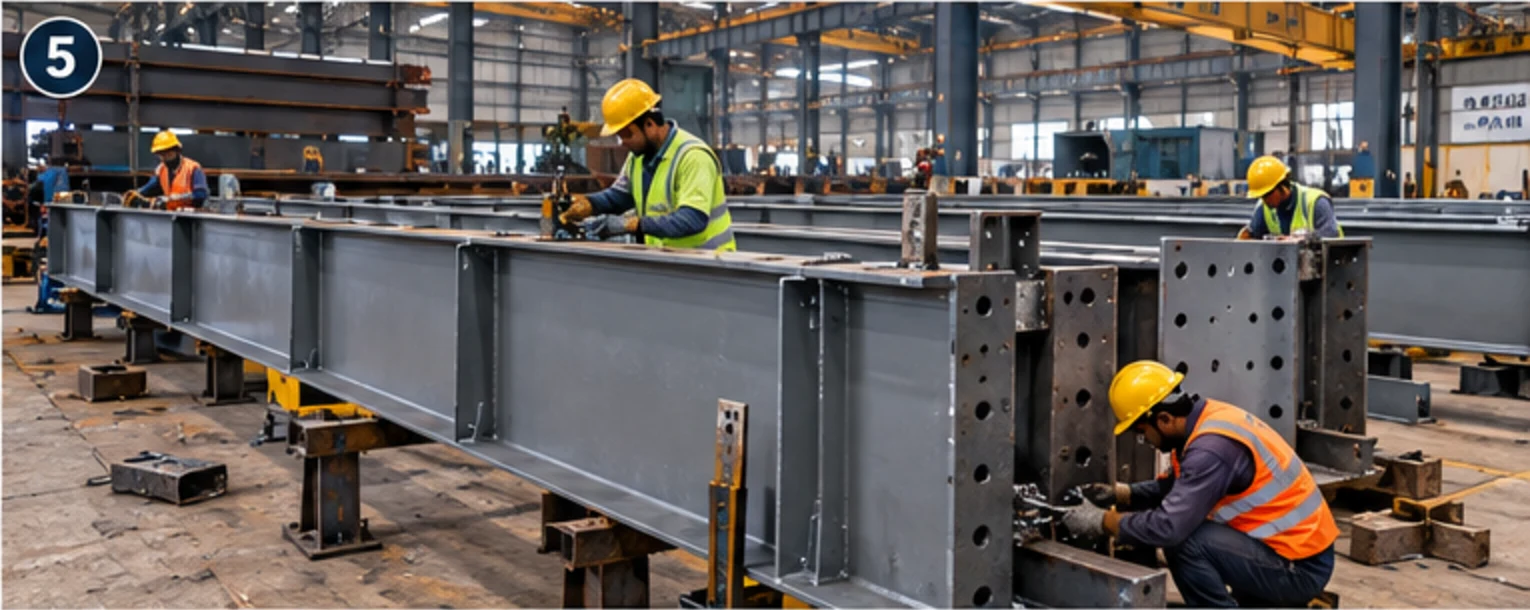
Welding follows the approved procedure and sequence; inspection is applied as the plan requires; machined faces and bores are finished once the heat has been put in and the piece has settled.
- 06
Coating, load-out and erection
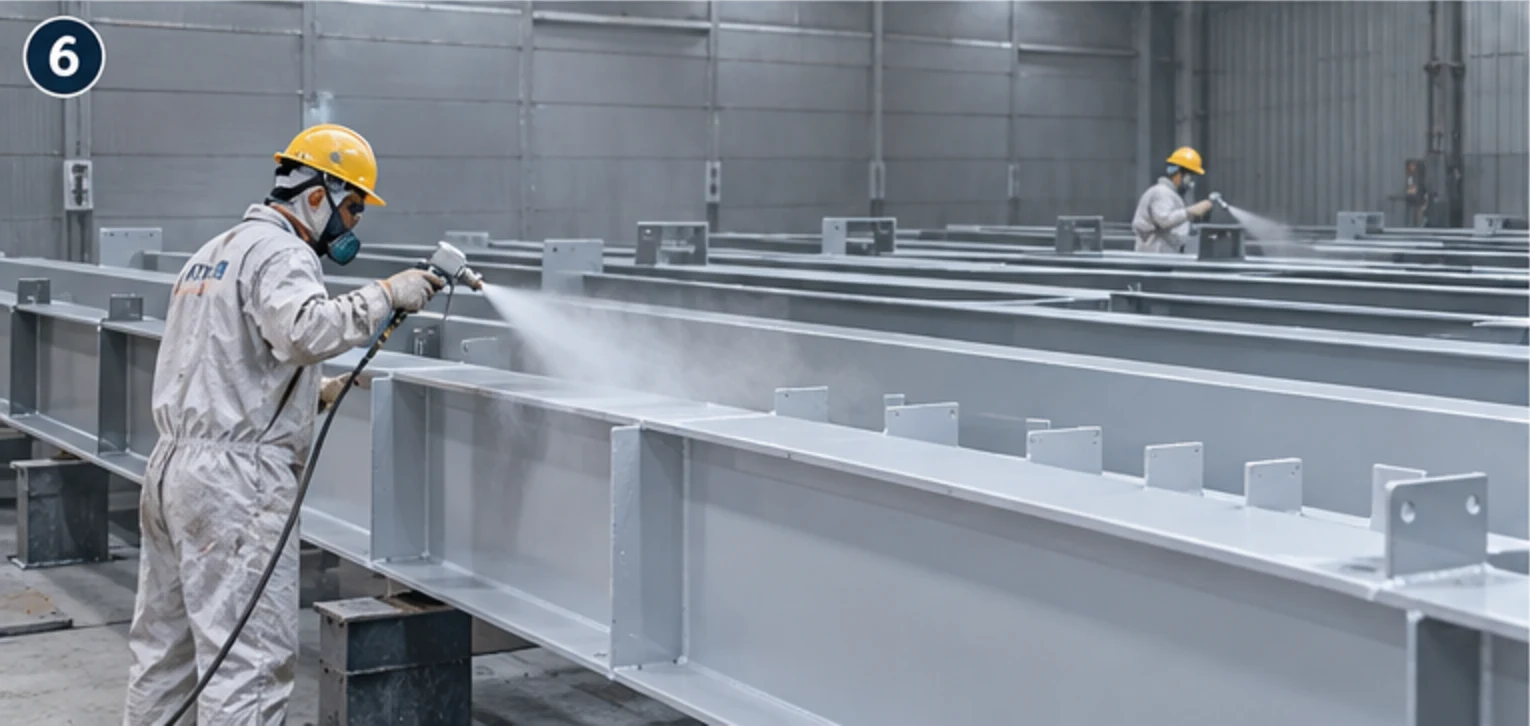
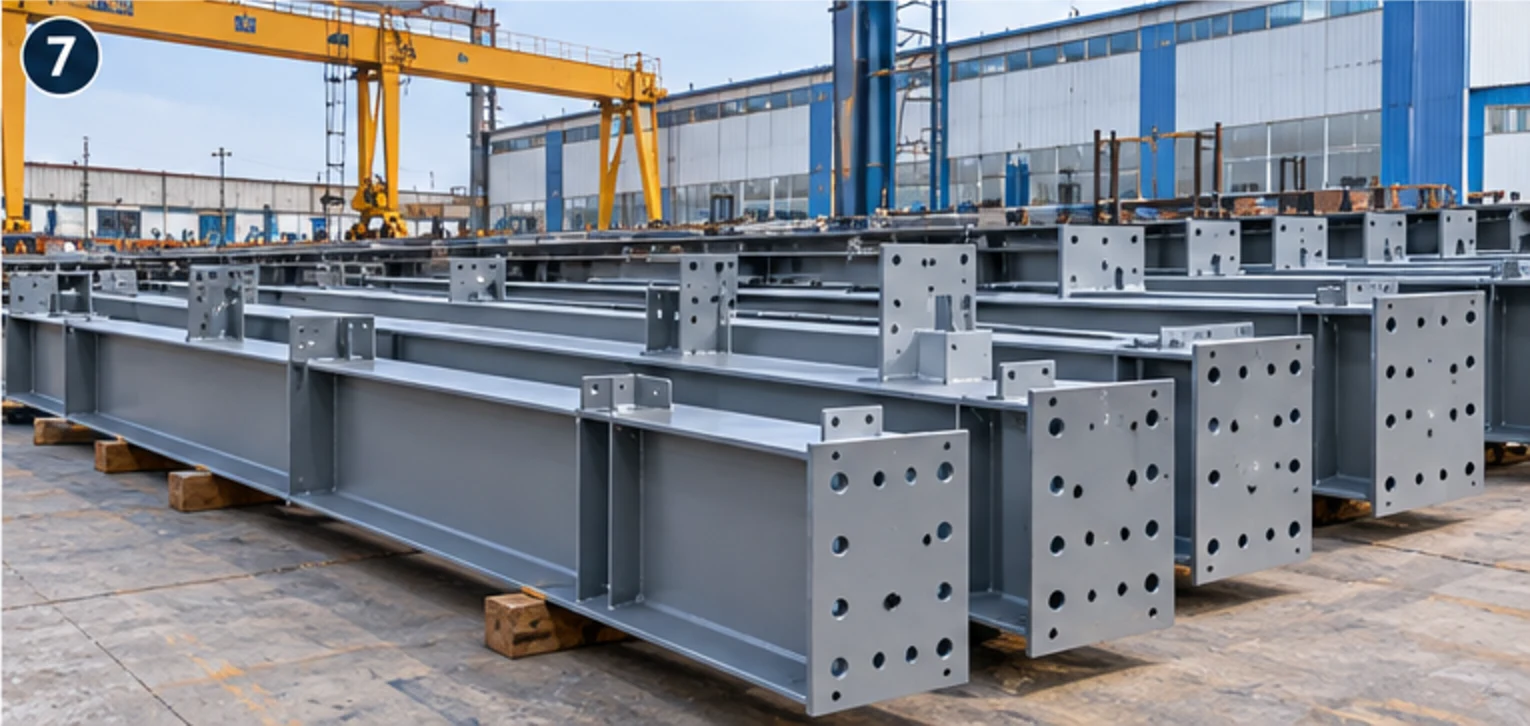
Blasting and painting, then lifting and transport arranged around the piece, followed by erection and alignment on site by the same organisation.
The work, step by step
Illustrative images showing the sequence and the type of work involved. They are not photographs of a specific completed AKEN project — for those, see the project photographs.
01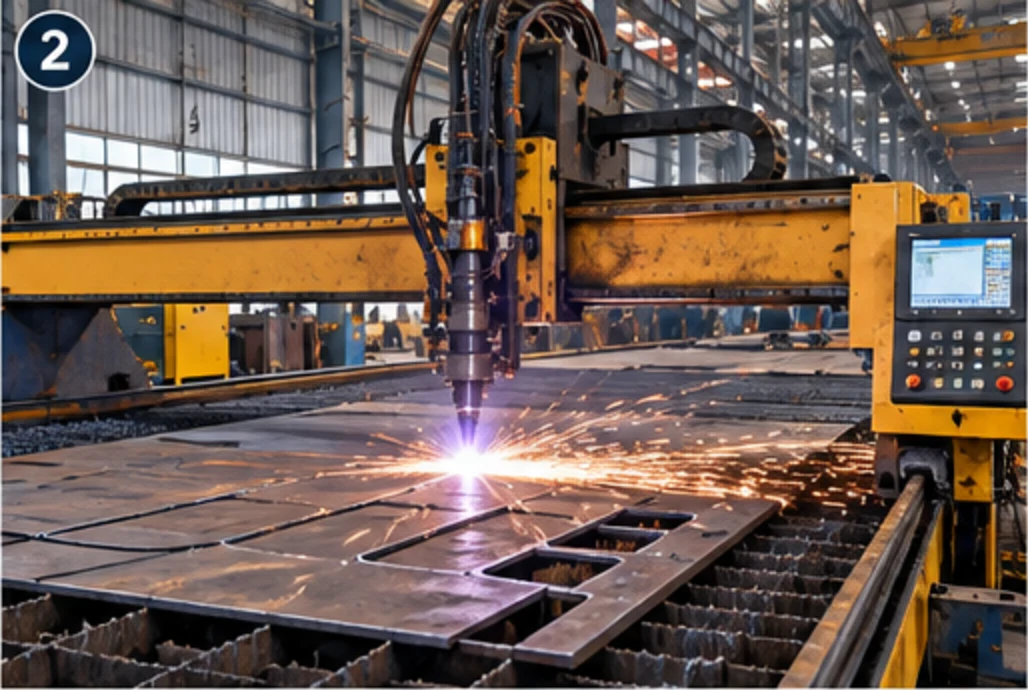 02
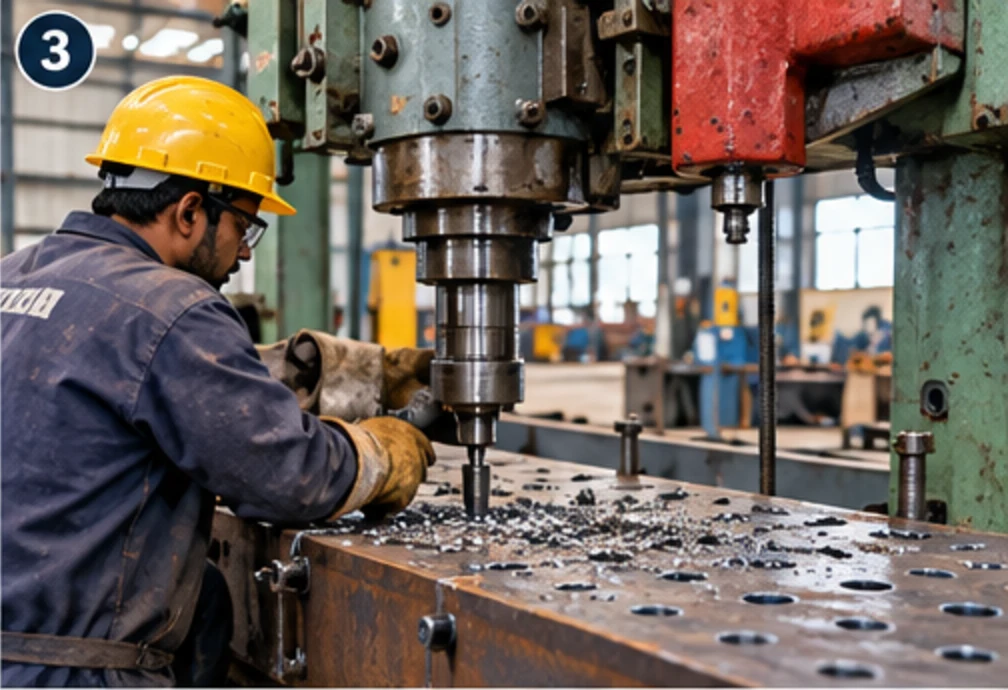 03
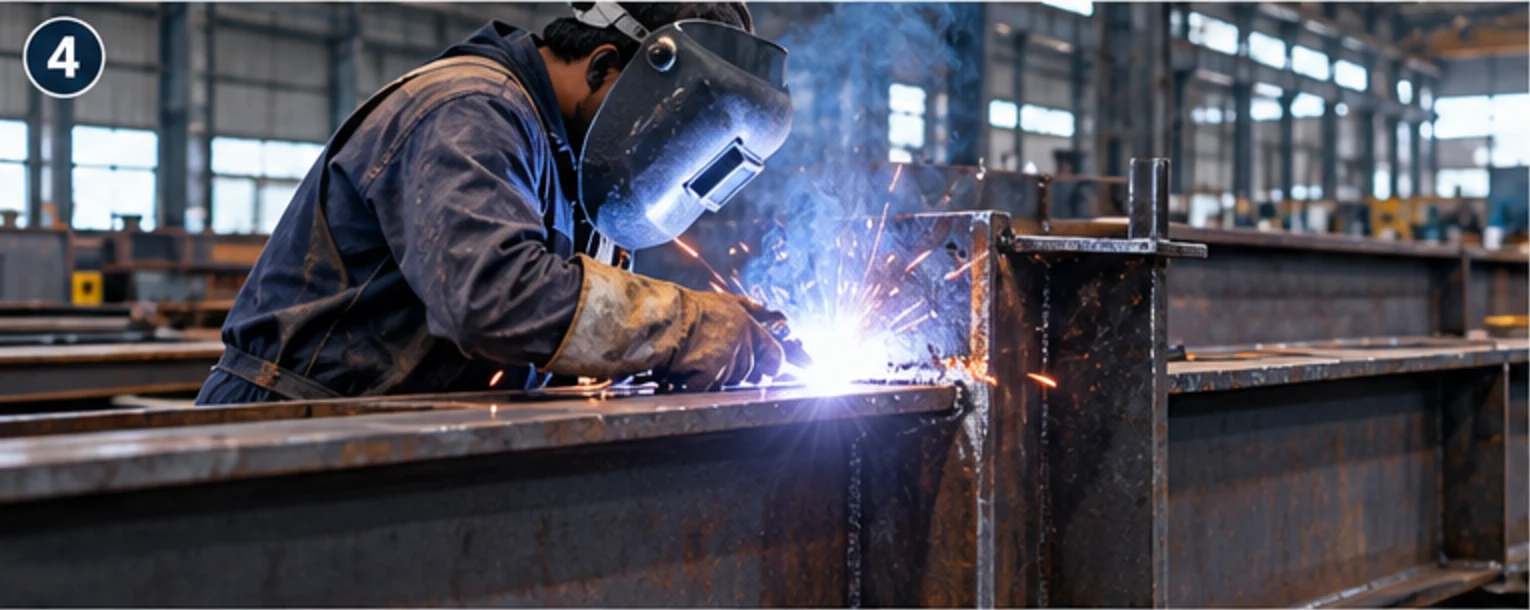 04
 05
 06
 07
Where this is used
We work for plant and procurement teams, EPC contractors and owner-operators across power, cement, mining, manufacturing, warehousing and infrastructure. Much of it is inside a running plant, which sets the terms of the job.
- Equipment supports and base frames for plant machinery
- Chutes, hoppers and transfer structures in material handling
- Ducting, stacks and large fabricated enclosures
- Built-up girders, trestles and heavy structural nodes
- Crane gantries and heavy runway girders
- Custom assemblies built to an equipment supplier's drawing
- Replacement fabrications for breakdowns and planned shutdowns
- Structures for power, cement, mining, steel and manufacturing plants
Why AKEN
Buildable answers at enquiry
If a component cannot be handled, welded or moved as drawn, we say so before the order rather than after the plate is cut. That is the cheapest conversation in this kind of work.
Sequence decided before cutting
The weld sequence, preheat, machining allowance and inspection points are fixed on paper first. Heavy welding punishes improvisation, and the piece cannot be straightened by opinion afterwards.
Made and erected by one party
The shop that welded the interface is the crew that has to make it fit on site. Interfaces and lifting arrangements are therefore considered by the people who will be at height with them.
Documented, not asserted
Material certificates, approved welding procedures, welder qualification and inspection reports are handed over with the piece, so a client's inspector is checking records rather than taking our word.
Shutdown-aware planning
Heavy replacement work frequently happens inside a fixed outage window. We plan delivery, access and erection to that window and stage the assembly off site where the plant has no room to build it.
Our safety controls are set out in full at site safety, including the photographs we withdrew because they showed unsafe work.
FAQ
Heavy Fabrication: questions buyers ask
What makes a job heavy fabrication rather than structural steelwork?
It is not a weight threshold so much as what the piece demands. Plate weldments, thick sections, full-penetration welds in awkward positions, assemblies that need trial fitting, and components with machined interfaces all fall here, because each one changes the procedure, the sequencing and the inspection. Ordinary beams and columns cut and welded to a connection detail do not.
How is welding qualified for heavy plate?
A welding procedure is qualified for the material grade and thickness range it will be used on, and the welders are qualified for the position and process they will work in. Both are submitted to the client or their consultant for approval before production welding begins. On thick sections the procedure also fixes preheat, interpass temperature and any post-weld treatment, which is where most of the quality of a heavy weld actually sits.
How do you stop a heavily welded assembly from distorting?
By deciding the sequence before the first run and holding the piece while it is welded. That means a balanced sequence worked about the neutral axis, back-step welding where it applies, heat input controlled within the procedure, and jigs, strongbacks or temporary bracing stiff enough to resist the contraction. Machining allowances are left where a face has to finish flat, so the movement is absorbed rather than corrected.
Does heavy fabrication need stress relieving?
Sometimes, and the requirement comes from the design, the material grade, the thickness or the service — not from the fabricator's preference. Where the specification calls for post-weld heat treatment, the cycle is defined by the procedure and the treatment is carried out at a facility equipped for it and witnessed. We do not assume the requirement away, and we do not add it to a job that does not need it.
Can you machine or bore a component after welding?
Yes, where a mating face, a pin bore or a set of aligned holes has to be true after fabrication. This is deliberate: heat moves metal around any hole drilled before welding, so the sequence is to weld, let the piece settle, then finish the critical features. Which features are left for machining is agreed on the drawing before work starts.
Why do you need trial assembly?
Because two assemblies fabricated separately can each be within their own tolerance and still not meet cleanly at site. A trial fit in the shop — before coating if the interface is critical — proves the bolt holes line up, the levels agree and the gap the design assumed is the gap that exists. Correcting it there costs handling; correcting it at height on a plant costs a shutdown.
How are large assemblies transported and erected?
Transport is treated as part of the design, not as logistics left to the driver. Lifting points are specified so the piece is picked up where it was meant to be picked up, temporary bracing is added where an assembly is too flexible to travel unsupported, and the route, axle loads and permits for an oversized load are checked before despatch rather than on the morning of load-out.
What inspection is carried out on thick-section welds?
Visual inspection throughout, and then the methods your specification names — dye penetrant and magnetic particle for surface and near-surface defects, ultrasonic testing for internal defects, which is the only practical volumetric method on thick plate. The extent of inspection, the acceptance criteria and whether radiography is required come from the specification; we arrange the method rather than choosing it for you.
Can heavy fabrication be done at site instead of in the shop?
Yes, and sometimes it has to be — when the piece will not travel, when it has to be built around existing plant, or when the plant has no shutdown long enough for shop fabrication and erection as separate stages. Site fabrication is slower and harder to inspect because the floor is not level and the weather is not controlled, so we use it where it is genuinely required and say so when it is not.
Can a very large assembly be split so that it can be transported?
Yes, but the split is a design decision and not a transport convenience. A site splice has to be positioned where the bending moment and shear allow it, detailed with the correct bolt group or full-penetration weld, and confirmed by whoever is responsible for the design. We will propose splice positions from a handling and transport point of view and have them approved before cutting. A splice invented at load-out is a structural change that nobody has checked.
Related services
Next step
Have an industrial project in mind?
Discuss your requirement with AKEN. Send the site location, the scope and the date you are working towards, and we will tell you what we need to quote it properly — usually a site visit, scheduled within 72 hours.
+91 82800 76864 · contact@aken.firm.in